
Category: progress
Hardwiring learning and effort = success

I try to lead by challenging preconceived notions that people are born talented or lucky. In Daniel Coyle’s The Talent Code: Greatness isn’t born it’s Grown he argues that talent is grown through purposeful practice…deep practice. Below I give a specific example of how this can be seen in students’ learning.
“We all have the ability to profoundly change our levels of talent, our level of skill. Where clusters of great talent emerge there has been a culture created where individuals are constantly reaching and repeating, making mistakes, receiving feedback, building better brains, faster more fluent brains…inside the brain myelin acts like insulation on the pathways and connections in the brain – each time we reach and repeat we earn another layer – signal speeds in the brain start to increase from 2 mph to 200 mph – neuro broadband – (or the difference between normal and great).” (Dan Coyle)
What he is describing is the hardwiring of the brain – through repeated efforts, mistakes and improvement, until the action (or learning) becomes as natural as riding a bike. That is how talent is created.
This recently became really evident to me during a lesson observation of my Y12 Sociology class: one observer sat next to a student and asked her to deconstruct the exam question we were looking at (having heard me used the word ‘deconstruct’ in my instructions). I was amazed, and pleased, to hear her deconstruct the question effortlessly, without hesitation and to depth, drawing on prior knowledge, pulling out command words, key subject-specific words and implied meaning behind the question in a thorough analysis that was no less deep than if I had done it. I realised then that her success in that skill (which she hadn’t been able to do at the start of the year) came from the fact that this was how we started every topic that we studied: with an exam question that we deconstruct thoroughly. Essentially, us practising this skill at the start of every topic had resulted in it becoming ‘hardwired’ in her brain so that she could effortlessly pull it out no matter what the topic or question. Deconstructing an exam question is a transferable skill so I hope that she is able to make use of it in her other subjects as well.

This message of repeating to hardwire your brain is exactly what I’m trying to get across to Y8 in my assemblies, preparing them for their mid-year exams, and reminding them that determined and deliberate effort = success.
Here’s another useful resource, Dan Coyle’s TED talk…
Post submitted by:
#neverstoplearning
Feedback. Please let us know how ‘Hardwiring learning and effort = success’ worked for you. Leave a comment on this post or tweet us at @nslhub.
‘Quick wins’ #11 – Tracking progress over time.

Multiple assessment sheets seemed like a good idea… Image by @gapingvoid
Why? In Art & Design we mark students coursework & exam projects numerous times before the final marks are submit at the end of the course. I found that students would occasionally lose the odd feedback sheet & sometimes even the assessment booklets I provided.
Possible solution. To make certain we have a clear record of progression in sketchbooks, I adapted an assessment worksheet I saw at Redland Green Art Department for our GCSE & A-Level classes. It is just one A3 assessment sheet which clearly shows the progression students make over time in each of the assessment objectives. Every time work is marked, I do it in a different colour pen and pupils can see their work gaining more marks as they redraft & build up their projects.
GCSE Marking Progress Sheet (editable) – Easily adapted for any subject!

Shrinking the change – removing clutter and focusing on what’s really important.
Outcome. Pupils & teachers can see clearly see on one page (which is stuck into sketchbooks) where they are making progress and the areas in which they need to improve.
Kate Heath
Art Teacher / Artist / Leader
#neverstoplearning
Feedback. Please let us know how ‘Tracking progress over time’ worked for you. Leave a comment on this post or tweet us at @nslhub.
Begin with the end in mind.

Begin with the end in mind.
Assistant Principal
@DominiChoudhury
#neverstoplearning
‘Quick wins’ #10 – Formative feedback marginal gain.
Image by @gapingvoid – http://gapingvoid.com/
Why? Returning formative feedback often has a demotivating impact, despite any positive comments. This is a particular issue for Key stage 4 C/D borderline students who find the leap to the next grade quite daunting, and able students attempting to bridge the gap between A-A*.
Possible solution. To direct student focus to improving I have added an extra comment to assessment sheets. When students receive their assessments they now see not only their target grade and current grade but the marks required to get to the next grade,
Resources.
Here are a couple examples of this marginal gain being implemented…

Example from a KS5 Art progress booklet.
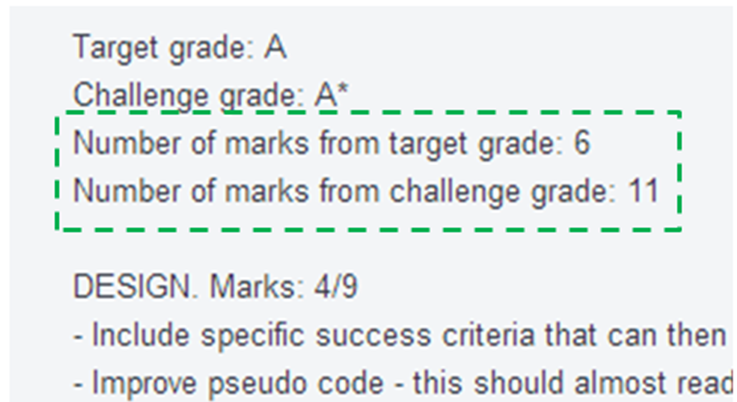
Example from a KS4 Computing class.
Outcome. The effect was immediate as students focused on the marks required to achieve the next grade rather than their current grade.A year 10 student commented on the fact that he was just 2 marks away from achieving a C grade, not that he had a D grade. In his previous assessment he had felt quite despondent. It is a simple yet, effective motivational tool that provides an instant snapshot of how close they are to the next step.
Post submitted by:
Rachel Taylor-Evans
Head of Art
#neverstoplearning
Feedback. Please let us know how ‘Formative feedback marginal gain’ worked for you. Leave a comment on this post or tweet us at @nslhub.
‘Quick wins’ #8 – Differentiated question cards

Differentiated question cards.
Why? To ensure that students are aware of the key questions that need to be asked and answered in a learning topic, and that pre-planned questions are appropriately pitched to the right students in a very mixed ability class (grades A through to E at A-level). Also, when questions are chosen carefully to have an appropriate level of challenge for each ability, this resource makes it easy to demonstrate the progress students make within the lesson.
Possible solution. As they walk into the lesson, provide each student with a slip of brightly coloured card with their key question on it and some space to write their answer on the card later on. Questions which are more open to interpretation can be repeated with different students. Students should keep their question card on their desk in front of them throughout the lesson as a visible reminder of the key question that they are seeking an answer for. Either use these questions punctuated throughout the lesson to draw students attention to what they have learnt so far after each activity, or use as a plenary at the end of the lesson.
Resources.
A set of pre-planned and differentiated questions, a couple of pieces of coloured card.
Outcome. The key questions keep students intently focused throughout the lesson seeking the answer to their question. Student responses to these questions, and further questioning that develops from their responses, enables the teacher to demonstrate the progress made within the lesson. Pre-planned questions which are more open to interpretation enable the teacher to ‘basketball’ the questioning to develop a depth of response from a range of students.
Post submitted by:
Domini Choudhury
Assistant Principal
#neverstoplearning
Feedback. Please let us know how ‘differentiated question cards’ worked for you. Leave a comment on this post or tweet us at @nslhub.
‘Quick wins’ #7 – Differentiated SMART objectives
Why?To raise achievement in my Year 12 and Year 13 classes, I knew that this year I needed to have an embedded exam focus in all my lessons and not just at the end of topics. At the same time, I also felt that the trend for differentiated learning objectives that are leveled or graded in every lesson was becoming meaningless for my students who knew full well that the learning that we were going to cover in a singular lesson would not mean that they were going to achieve a ‘C’ or ‘B’ grade by the end of that lesson. My objectives needed to become SMART: measurable and achievable steps to success with a focus on practicing exam skills and demonstrating exam knowledge in every lesson.
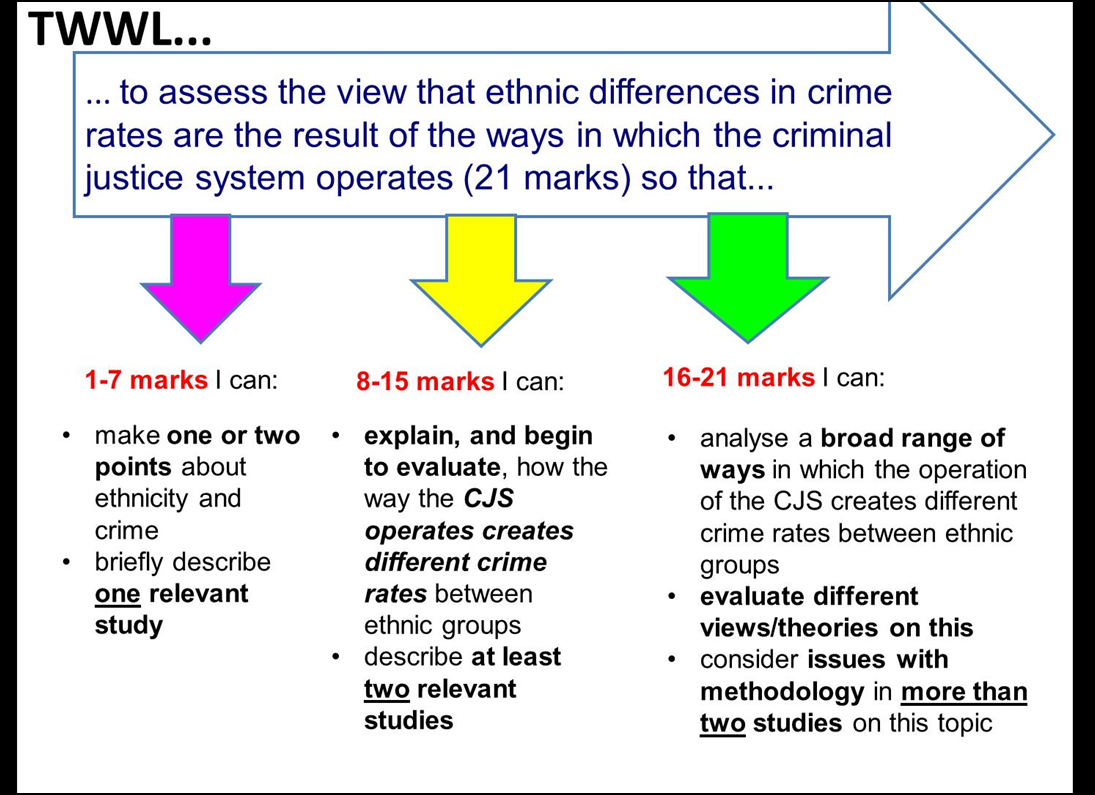
Differentiated SMART objective with achievable outcomes.
‘Quick wins’ #6 – Getting students to reflect on their progress.

RAG cards used by students to reflect on their learning. Also a great way to show progress over time.

Keep the cards on your desk for ease of use.

Example from a students exercise book.
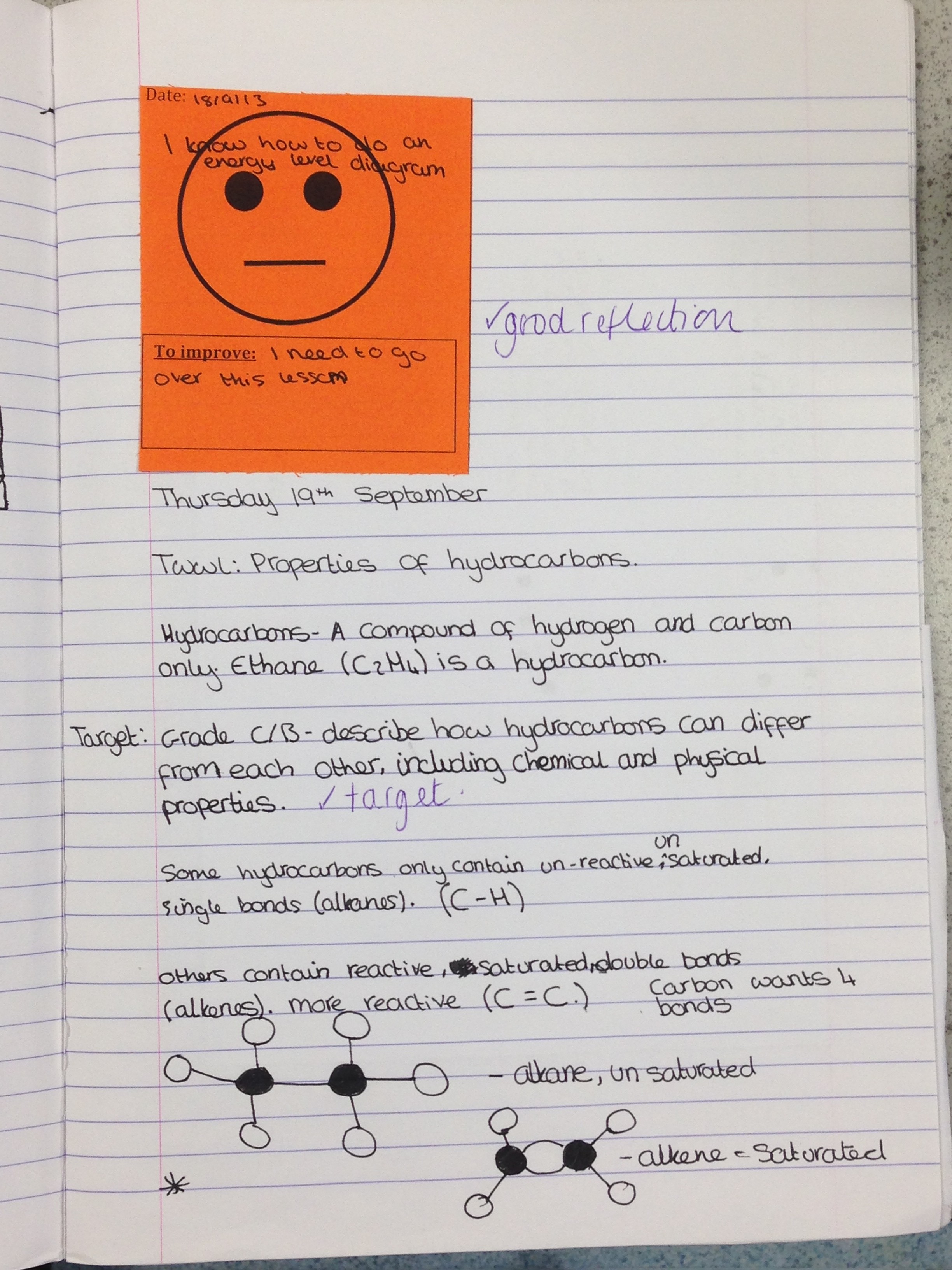
Another example from a students exercise book.
 Never Stop Learning