Blog of the Week | 14th June 2015

This weeks blog of the week goes to Chris Hildrew for an older post entitled: ‘Closing the gap marking.’

At school recently we have been discussing why pupil premium is important and looking at things teachers can do in order to ‘close the gap.’ This post gave some real practical advice on how the act of marking and feedback is one of the most powerful tools at our disposal as teachers to enable all students to progress with their learning.

It’s the gap between students receiving the feedback and acting on it that we need to address.

Image via @chrishildrew

How often do we spend a lot of time and effort providing feedback to students but don’t insist on all students acting upon it?
Read the full post here.

Blog of the week | 7th June 2015

#BOTW this week goes to Dan Brinton for his wonderful insight and dissemination of some research into what makes great teaching. As Dan outlines in the beginning of the post:

This blog is a summary of a Practice Guide by Pashler et al. from 2007, which sets out to provide teachers with specific strategies for instruction and study.

I came across it in a roundabout way via this paper by Dunlosky et al cited in the “What makes great teaching? Review of the underpinning research” by Rob Coe et al.

The central tenet of this particular Practice Guide is that learning depends on memory, which can in turn be strengthened by concrete strategies. These strategies help students to master new knowledge and skills, without forgetting what they have learned.

Read the full post here.

#neverstoplearning

Blog(s) of the week | 31st May 2015

Two blogs this week that have helped with reflecting on what great teaching may be…

1. Great teaching – Great teachers by Shaun Allison

If you are looking to reflect upon a particular aspect of your teaching this post by Shaun is a great place to start.

2. Teaching better. My pedagogical to-do list by Tom Sherrington

In this post Tom outlines and commits to act on his reflections by listing things he intends to try in order to improve his teaching.

#neverstoplearning

Blog of the week | 17th May 2015

This weeks blog of the week is great reflection on effective questioning and what the purpose of questioning is.

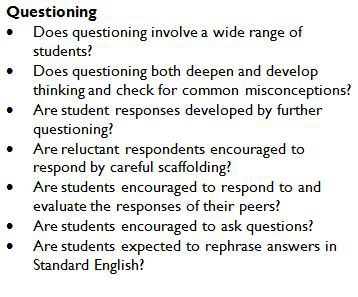
The blog post outlines the reasons for questioning and includes a range of different strategies that can be employed across all subjects. It finishes with a set of questions to reflect on your own questioning…

6questioningRead the full post here.

#neverstoplearning

Blog of the week – 10th May 2015

This weeks ‘Blog of the week’ comes from Dylan Wiliam…
Is the feedback you’re giving students helping or hindering?
 
This neatly summarises Wiliam’s post:

The only thing that matters is what students do with it. No matter how well the feedback is designed, if students do not use the feedback to move their own learning forward, it’s a waste of time. We can debate about whether feedback should be descriptive or evaluative, but it is absolutely essential that feedback is productive.

Add to that concept a second related principle: Feedback should be more work for the student than it is for the teacher. Teachers who internalise and practice feedback based on these precepts will be well on their way to teaching that improves learning.”

#neverstoplearning

Blog of the week – 26th April 2015

This weeks ‘blog of the week’ has another revision theme and goes to Head-teacher John Tomsett – This much I know about… what really works when preparing students for examinations.

In the post John shares his vast experience of preparing student for exams and enlightens us with some tried and tested strategies.

#neverstoplearning

Blog(s) of the week – 19th April 2015

Two blogs have caught my eye this week that tie nicely into exam revision.

1. Knowledge organisers – specify subject knowledge in meticulous detail – by Joe Kirby.

In this post Joe makes a case for being relentless specific with the subject knowledge that students need to know. This takes the form of one side of A4 – a knowledge organiser. This is not only useful for revision but also at the beginning of the teaching cycle of a new topic.

2. Sequencing lessons in the run up to exams – by Andy Tharby.

Andy’s post outlines his plan for revision in the run up to the exams with memory in mind. He also makes use of Joe’s knowledge organisers idea.

#neverstoplearning

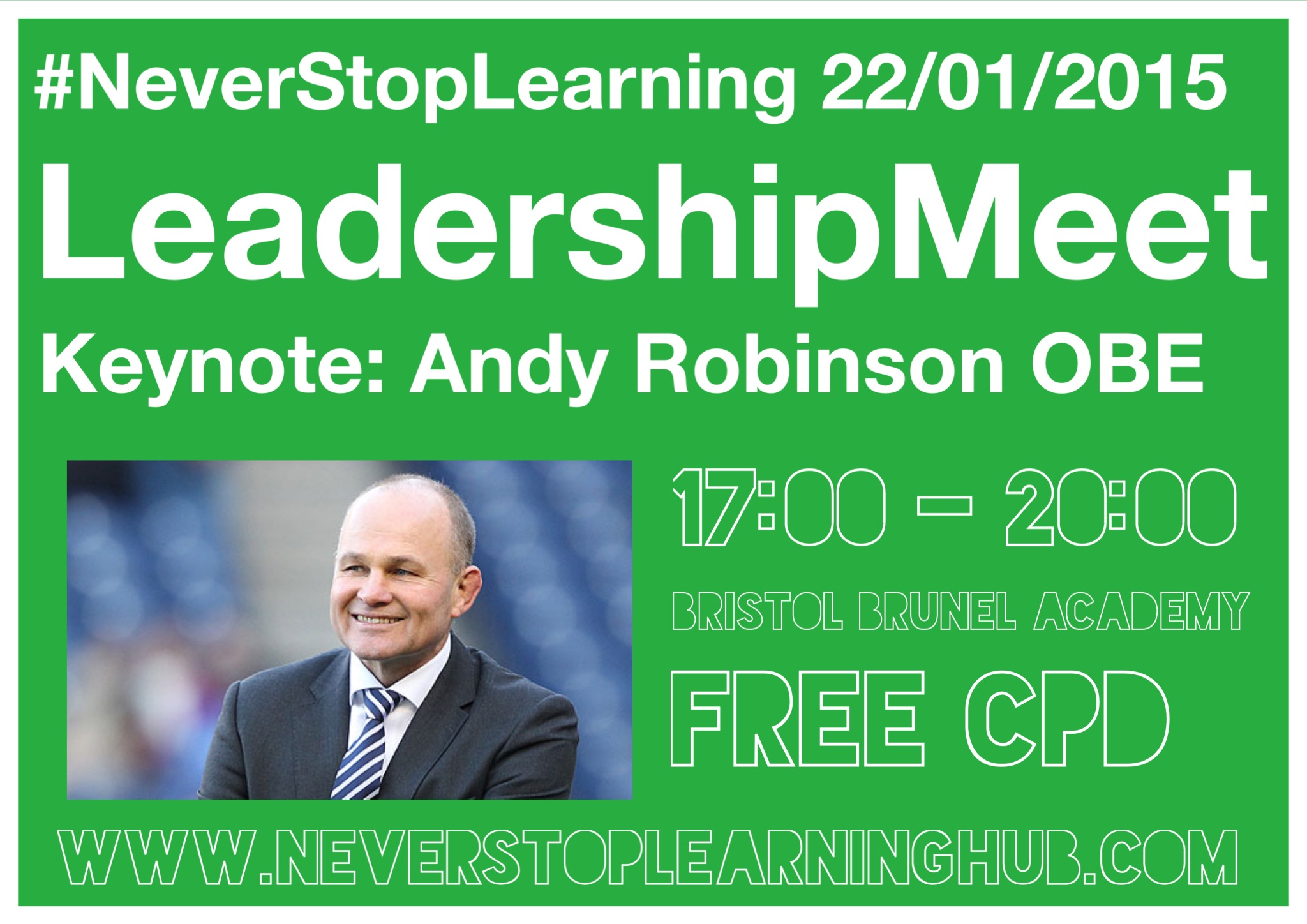
#LeadershipMeet | 22/01/2015 | Keynote: Andy Robinson OBE

Building upon our successful #TeachMeets we are delighted to announce our first every #LeadershipMeet which will take place at Bristol Brunel Academy on Thursday 22nd January 2015: 17:00 – 20:00.

The event is being organised by  Matt Leek (PE teacher & Director of the CLF Elite Rugby programme). As a result of Matt’s remarkable work building a squad of academic rugby players from across a federation of schools, we are delighted to announce Andy Robinson OBE as the keynote speaker for the event. Andy has agreed to discuss how he manages big personalities in elite sport and being a former teacher he’s able to make clear connections with school leadership.

If you are an aspiring leader, already in a school leadership position or interested in developing your capacity as a leader from any background – this event is for you!

CLICK HERE TO SIGN UP.

Keynote: Andy Robinson OBE

Event schedule.

17:00 – REGISTER – Tea/coffee/food – networking.

17:45 – INTRODUCTION – Matt Leek (CLF Elite rugby/PE teacher)

17:50 – KEYNOTE 1 – Mike Hall & Gary Townsend (Bristol Rugby Academy)

18:10 – KEYNOTE 2 – Richard Bryan (Rugby Director RPA)

18:30 – BREAK

18:45 – KEYNOTE 3 – Andy Robinson OBE

19:30 – Q&A PANEL – Andy Robinson OBE, Richard Bryan, Mike Hall, Gary Townsend, Mitch Eadie, Ellis Genge.

20:00 – FINISH

#neverstoplearning

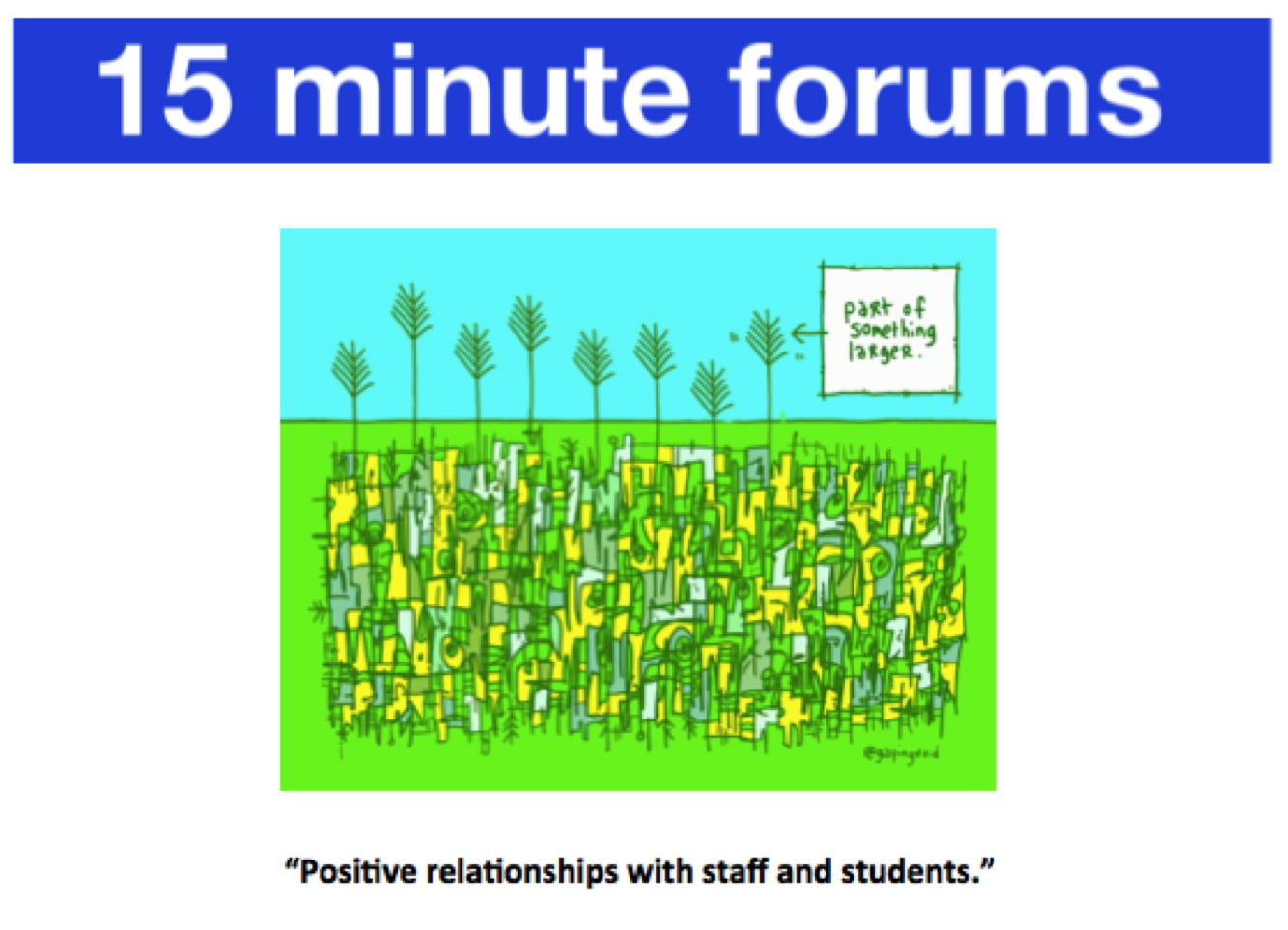
#CPD – 15 minute forum: Positive relationships with staff and students

Sharon Porter | @sporteredu

Sharon Porter | @sporteredu

15 minute forum: ‘Positive relationships with staff and students’ | Sharon Porter | @sporteredu

Date: 12/09/2014

Summary of forum.

Make it a habit.

  • Make an effort at all times (even if you are feeling ‘crappy’).
  • Smile and say “Hello!”, “Good morning!”, “Good day!”  Even if you don’t know that member of staff or even if you don’t teach that student…it can make a difference to someone’s day.

Positive relationships with students.

  • You will need to do the usual text book stuff
    • Praise students
    • Let them know that you are proud of them (verbally or written amongst feedback in books)
    • Make sure that students are aware of your expectations; be firm, be fair be consistent.

Positive relationships with colleagues

  • Make eye contact when you are talking (it might feel a bit strange to start with but it just comes across as rude if you don’t!)
  • Listen.  Really listen.  Try not to sit there thinking about what you are going to say next…you’re not really listening.  Summarise what you’ve heard and clarify this with ‘informed’ questioning.
  • Express yourself; don’t just agree all the time.  Challenge colleagues in conversation and occasionally ask “why?”
    • Why do you think that?  Where did you get that information?…..
  • Give someone a compliment – I really liked what you had to say in that meeting because…; I thought that proforma you produced was really good; I particularly liked….
  • Don’t shoot folks down if you don’t like what they have to say.  Suggest alternatives
  • Offer help – even if you are really busy, can you take on a small task to help a colleague?  There is always someone in a worse position that you.
  • Be positive…it will make you feel better!